Your cart is empty


Medieval town
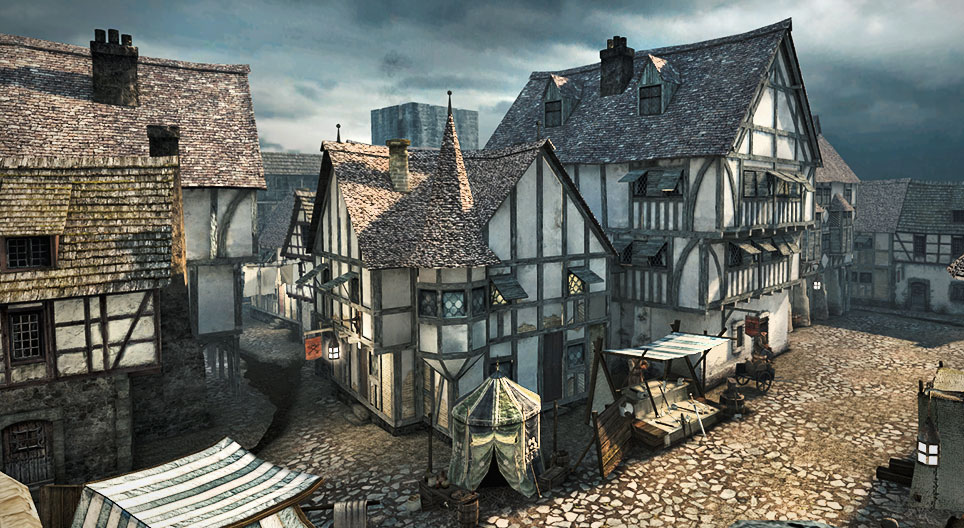
Medieval townhouses were built from stone or brick and were several storeys high.
History
Grades 1 – 12
Keywords
mozaLink
/Weblink
Questions
- When did the First Crusade take place?
- Which year is considered to be the end of the Middle Ages?
- Which year is considered to be the beginning of the Middle Ages?
- What does a cartwright do?
- What does a cooper do?
- What does a tanner do?
- What was a ´guild´?
- Which craft did not exist in the Middle Ages?
- Which craft did not exist in the Middle Ages?
- Which craft did not exist in the Middle Ages?
- What were stocks used for in medieval times?
- Which spice was not used in the Middle Ages?
- Which holiday does not originate in the Middle Ages?
- Which vegetable was available in the Middle Ages?
- Which dish was not available in medieval Europe?
- Which fruit was not available in medieval Europe?
- Which vegetable was not available in medieval Europe?
- What was a popular spectacle in medieval towns?
- What service was available in most medieval European towns?
- Which object was not available for people in medieval times?
Scenes
Medieval town
Life in Medieval towns
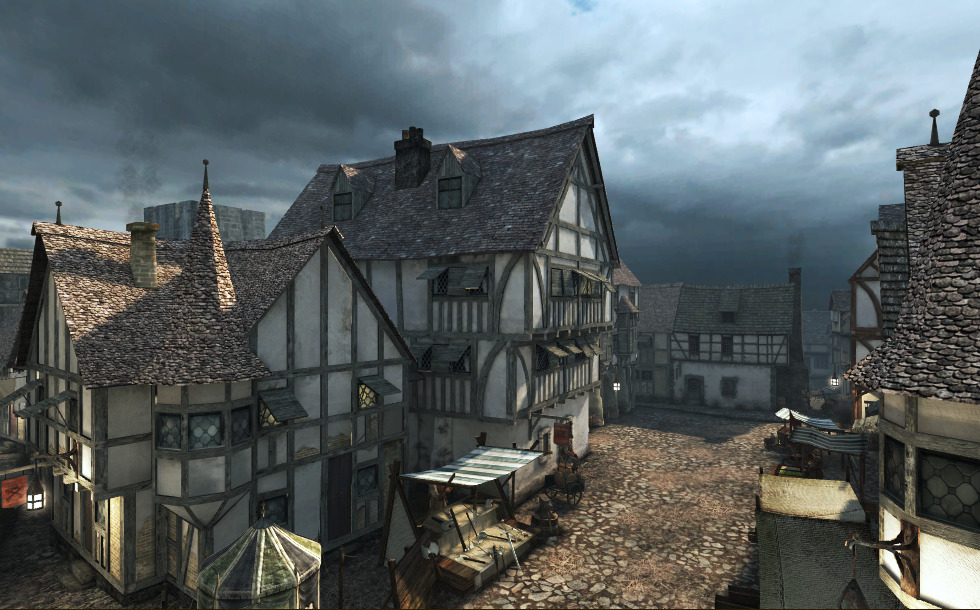
The spectacular development of medieval towns began in the 10th century. At this time, a new social class of craftsmen and artisans appeared and trade was booming. Defensive walls were built around the towns, which enjoyed greater freedom than other communities. The unique character of medieval towns determined the daily life of town dwellers.
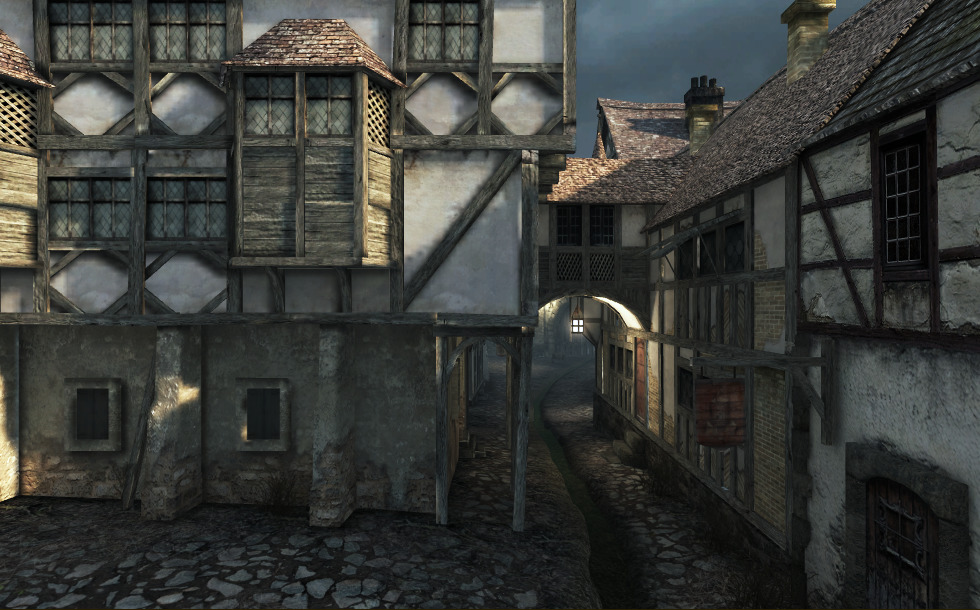
Besides churches, town halls, guild halls and marketplaces, it was the streets that determined the image of a town. Houses were built tightly next to each other, streets were not paved and there was no sewage system. The street was the scene of most activities of everyday life: craftsmen and apprentices beavering away in workshops, merchants selling their goods in shops and tents, horse carts lumbering along, livestock and children scurrying along the banks of the stream that flowed through the town. Towns were noisy and dirty.
Medieval house
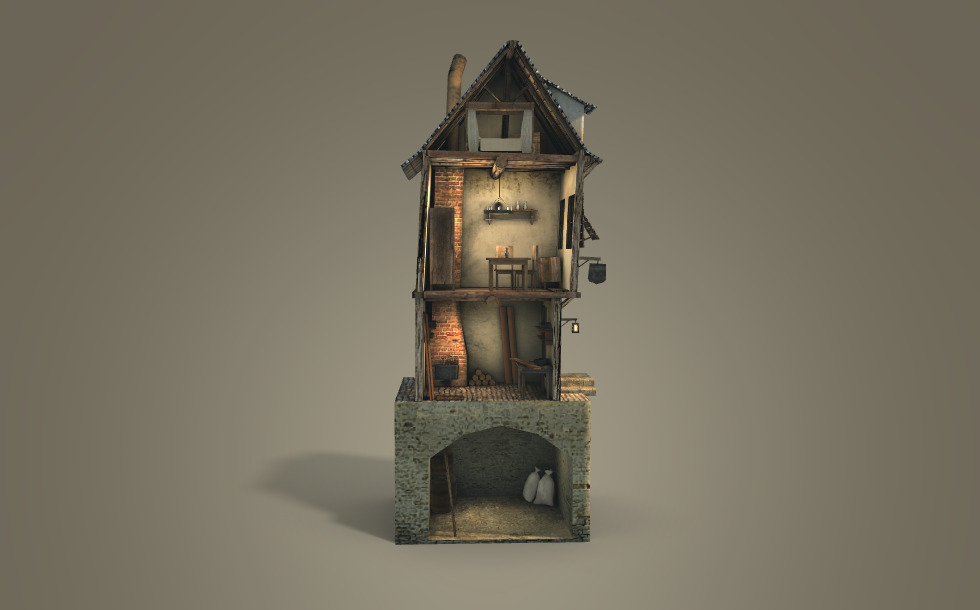
- cellar
- workshop
- living area
- attic
Medieval homes
Rooms were lit by candles placed on wall sconces or chandeliers. They generally used tallow candles, beeswax was used only on festive days.
The furniture of rich citizens included tables, armchairs, beds and shelves, as well as carved and painted chests of drawers. Wardrobes were used instead of chests from the 15th century. Canopy beds protected people from insects.
Rooms were decorated with tapestries or carpets (carpets were also used on the floor).
Carved doors and window frames, and decorative locks enhanced the beauty of wealthy homes.
The kitchens of wealthy citizens were usually situated on the middle or top floor of their houses (the resulting smoke often caused problems in these kitchens). Pots were made of clay, wood or iron.
Kitchen tools were hung on the walls or shelves next to the stove. Spices were stored in cabinets. Garbage was poured onto the streets through the window.
In the garden, if there was one, people kept livestock and grew vegetables. Otherwise, they bought food from street sellers or at the marketplace. Wealthier citizens usually ate substantial meals twice a day (at 10am and 6pm). Meat (pork, beef) was the most popular food, but they often ate fish, vegetables and fruits.
Street
Medieval townhouses
Medieval townhouses were usually built of stone or brick on timber frames. Their roofs were covered with tiles or slate. Wealthier townspeople lived in two- or three-storey buildings, while commoners lived in single-storey houses.
Workshops or shops were situated on the ground floor of wealthy citizens’ houses. The kitchen or the rooms were situated above the workshops. The underground cellars were used for storage.
The doors to relatively wealthy citizens' houses were decorated with iron ornaments. There were several openings on each storey, providing fresh air and light for the residents. Only aristocrats could afford glazed windows, common people covered their windows with fabrics. The floors were covered with timber or stone tiles. Walls were whitewashed (in wealthy people’s homes, they were covered with decorative paintings).
Narration
The spectacular development of medieval towns began in the 10th century. At this time, a new social class of craftsmen and artisans appeared and trade was booming. Defensive walls were built around the towns, which enjoyed greater freedom than other communities. The unique character of medieval towns determined the daily life of town dwellers. Besides churches, town halls, guild halls and marketplaces, it was the streets that determined the image of a town. Houses were built tightly next to each other, streets were not paved and there was no sewage system. The street was the scene of most activities of everyday life: craftsmen and apprentices beavering away in workshops, merchants selling their goods in shops and tents, horse carts lumbering along, livestock and children scurrying along the banks of the stream that flowed through the town. Towns were noisy and dirty.
Medieval townhouses were usually built of stone or brick on timber frames. Their roofs were covered with tiles or slate. Wealthier townspeople lived in two- or three-storey buildings, while commoners lived in single-storey houses. Workshops or shops were situated on the ground floor of wealthy citizens’ houses. The kitchen or the rooms were situated above the workshops. The underground cellars were used for storage. The doors to relatively wealthy citizens' houses were decorated with iron ornaments. There were several openings on each storey, providing fresh air and light for the residents. Only aristocrats could afford glazed windows, common people covered their windows with fabrics. The floors were covered with timber or stone tiles. Walls were whitewashed (in wealthy people’s homes, they were covered with decorative paintings).